2023.12.25
TECHIC


If possible, be ahead of time; if not, advance with the time and never be left behind.
——Briusov
As the forerunner of the age, cutting-edge trends have been helping the automobile industry to predict consumers’ demand, optimize market decisions, adjust future strategies, and create appropriate products and experiences for future consumers and target audiences at the right time.

TECHIC is the first innovative research and development center in China to provide full-process COLOR&TRIM service. By the research method of “PESTLE Driving Factors ”,“Michael Porter's Five Forces Model”and “Intervention analysis model” , based on the insights and experience from past projects and industries, and relied on continuous insight on the big data, TECHIC will promote a series of CMF designing cutting-edge trends to predict the automotive industry from 2023 to 2024, which will help you to understand the new trends in the future.
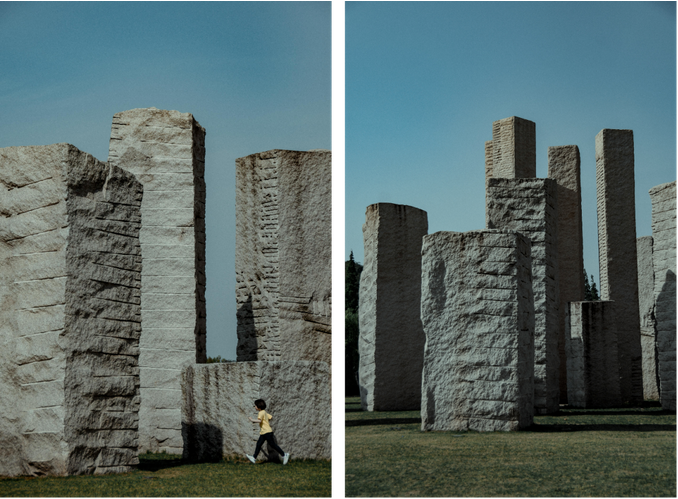
Humanity will put an end to the“Progressive Era”, in which efficiency reigned supreme and the Earth was plundered, reposition humanity and embrace a new era - “The Age of Resilience”.
-THE AGE OF RESILIENCE
Jeremy Rifkin, the futurologist

In his new book, The Age of Resilience, Rifkin boldly predicts that the 250-year-old "Progressive Era" (commonly known as the age of the Industrial Revolution) is coming to an end and that a new "Age of Resilience" has begun. China's push for an ecological civilization and the European Union's Green New Deal are expected to make these two economic entities become the pioneers in the"age of resilience".

As the first country to be hit by the epidemic and the first to contain its spread, China has set an example for other countries with its highly resilient recovery of consumption after the epidemic.
The epidemic is not necessarily an accidental event. Since the progressive era, human beings have exchanged social wealth at the expense of natural resources. The emergence of viruses, climate warming and energy depletion are all warnings from nature.

Mankind needs a new civilization. Based on the face of post-epidemic development and resilience, and the rethink of the symbiotic relationship between human and nature, it points out a pragmatic development direction at the transition of this era, namely “the age of resilience". This is an opportunity to repair the trauma of the epidemic, usher in a new reconstruction of the order, and develop the human ability to adapt and cope.

Resilience

Nearly three years after the epidemic, all industries are faced with the challenge of adjustment, innovation and even disruption. Resilience generates systems that can absorb and adapt to whatever unexpected future events may occur.
Stability

Resilience does not mean returning to the exact same state as before. Resilience should never be considered as a "state of being" in the world, but a way of acting on it.
Permanence

Resilience determines the durability of relationships within systems and is a measure of the ability of these systems to accept changes in state variables, driving variables, and parameters and still maintain a stable state.
Heterogeneity
A resilient management approach would emphasize the need to keep options open, to look at events on a regional scale rather than in a local context, to learn to live with change and to develop resilience.
TECHIC will take a forward-looking view into the future and outline how we should anticipate the automative CMF design to win the future opportunities in the "age of resilience" under the new development model.