



Materials with Flash and Dynamic Light Effects
A TECHIC Material Library article featuring supplier-backed material resources that create flash, dynamic highlights and distinctive CMF expression through surface texture, coating behavior, optical pigment and layered material structure.
Four material routes with flash and dynamic light
These are not abstract trend references. They are supplier-backed material resources TECHIC can help review, sample, translate into supplier-ready CMF specifications and evaluate for production.
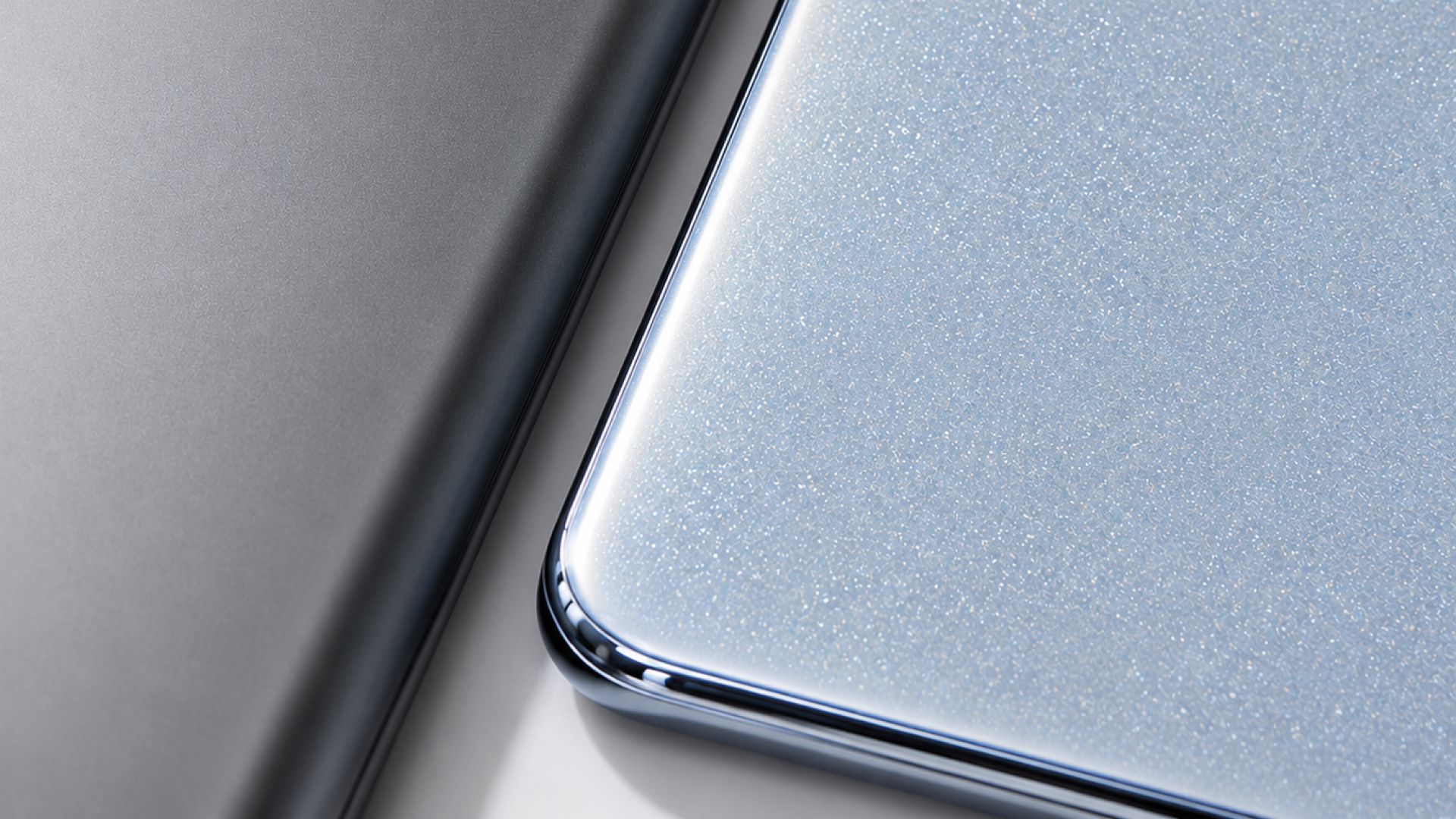
Crystal-Etched Flash Glass
A glass surface treated with multi-faceted micro-crystal etching, reflecting light as a dense sparkle field rather than a flat anti-glare matte finish.
How does crystal-grain etching create flash without printing?
The etching process grows multi-faceted micro-crystals directly on the glass surface. Each facet reflects light at a slightly different angle, producing a dense sparkle field that comes entirely from glass geometry, not from any printed or coated layer.
Why does this outperform standard AG glass?
Standard AG glass solves glare but leaves a flat, uniform matte surface with no visual depth. Crystal etching keeps the anti-glare function while adding a layer of light response that standard AG cannot produce, with sparkle scale and direction that can be tuned to the design intent.
Crackle-Effect Lacquer
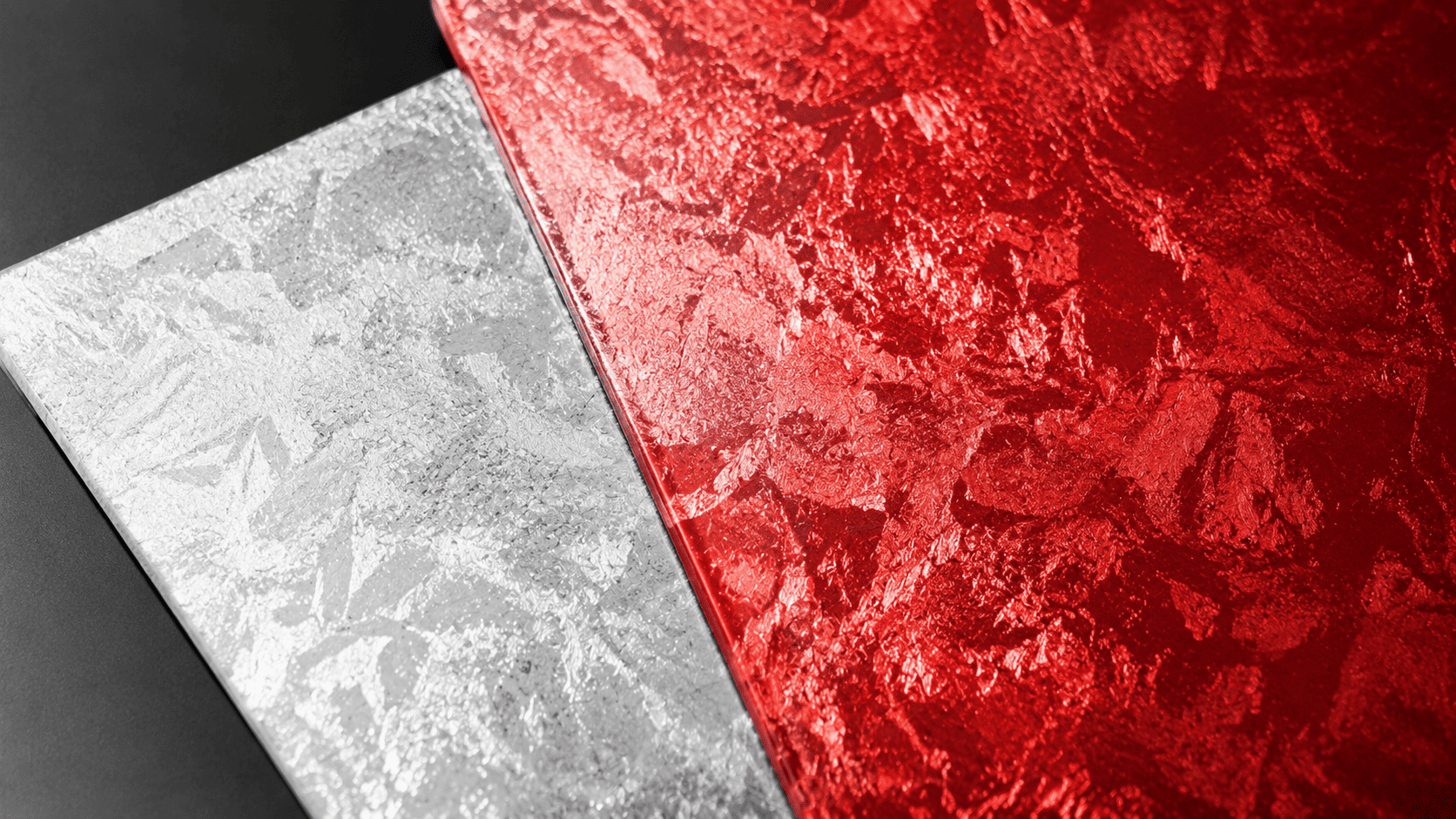
A coating that naturally cracks during curing, creating a metallic-flecked fracture pattern that varies from part to part.
Why does cracked lacquer create a different pattern on every part, and is that a design advantage?
The base coat and top coat shrink at different rates during curing. This stress difference tears the surface coat into a crackle pattern, and because the tearing is driven by material stress rather than a fixed mold or print, each part carries a slightly different fracture geometry. Most coating processes aim for uniformity, but here the natural variation gives each unit a one-off, handcrafted quality that is difficult to fake with print or film, which is valuable for products positioned around individuality.
What kind of products does this crackle effect suit best?
It works best for products where a distinctive, non-uniform look reinforces the brand story, such as limited editions, lifestyle accessories or items meant to feel personal rather than mass-produced. It is less suited to products that require strict batch-to-batch visual consistency.
Mirror-Finish Laser Silver Coating
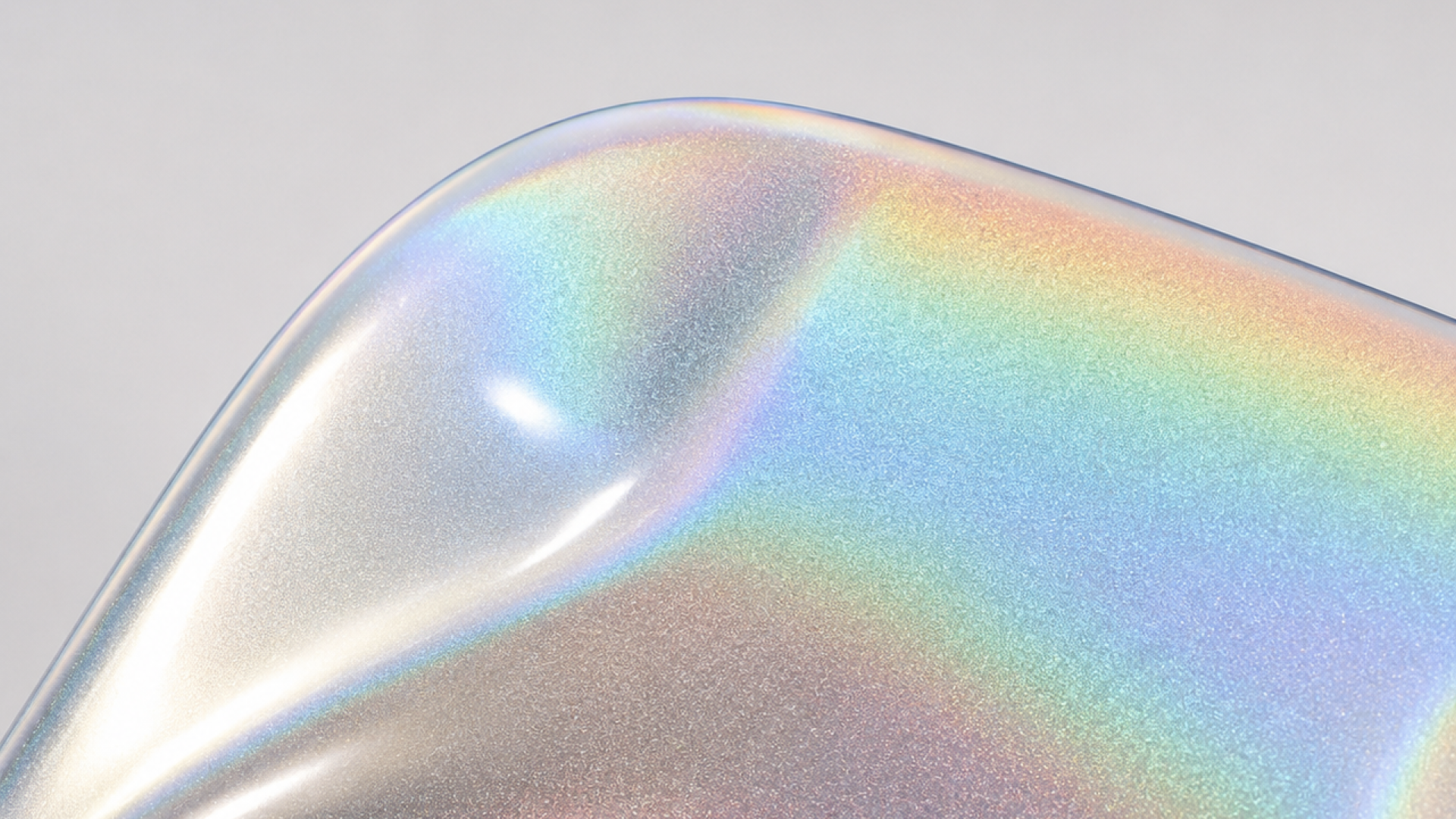
A coating that reads as a cool mirror-like silver from a direct view, then shifts into a layered rainbow gradient as the viewing angle changes.
How can one coating show two different visual states?
The coating combines a cool-toned metallic silver base with optical interference pigments. Viewed straight on, the surface reads as a clean mirror silver. As the angle shifts, the interference pigments split light into a rainbow gradient, so the same coating presents two distinct identities depending on how it is viewed.
When should a product team consider this over standard metallic paint?
Standard metallic paint holds one visual identity regardless of angle or lighting. This coating is worth considering when a product needs to stand out in display settings while still reading as understated and premium during everyday handling, since the dual-state effect serves both needs from a single material.
Shimmer Scale Leather
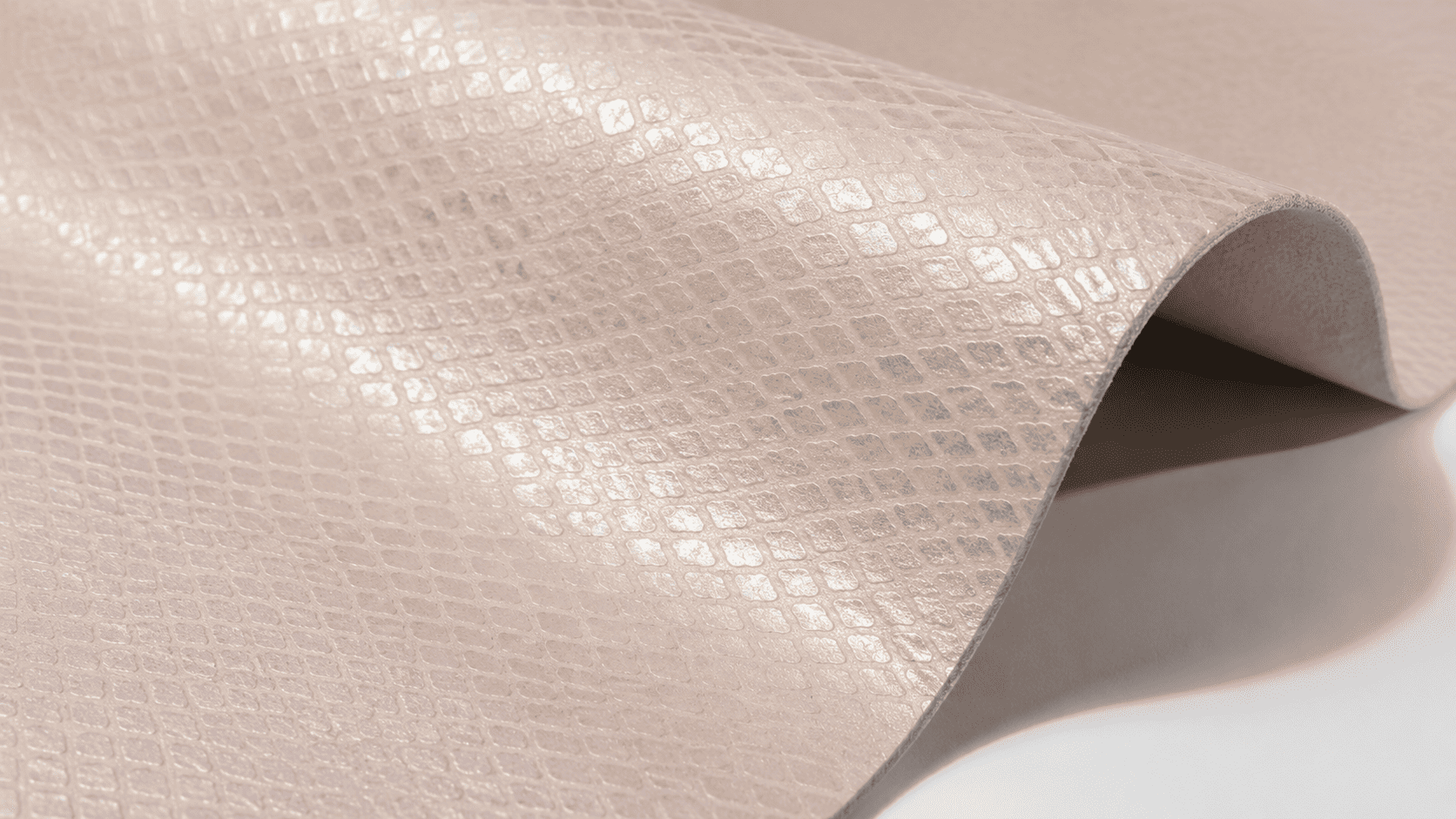
A five-layer composite leather with an integrated shimmer effect that shifts color as the viewing angle changes.
How is this different from standard leather?
Standard leather holds the same flat tone no matter how the light hits it. This material doesn't. Its five-layer structure is what creates the shifting, scale-like flash, so the color and shimmer genuinely move as you tilt the piece, rather than just catching a bit of extra shine.
What kind of products is this material suited for?
It's a good fit for CMF and industrial design projects where a standard leather finish would feel too flat or generic. Think product categories where a bit of visual surprise and a premium decorative feel actually matter to the buyer.
From material sample to product-ready surface
TECHIC helps product teams identify surface material opportunities, translate CMF intent into supplier-ready specifications, coordinate sampling and prototype trials, and review production feasibility before a material route is locked.
Material scouting
We track emerging materials and manufacturing processes across China's supply chain.
CMF translation
We turn visual, tactile and brand intent into clear CMF specifications for suppliers.
Prototype validation
We coordinate material samples, prototype trials and product-context evaluation.
Production review
We review yield, process risk, quality control and scale-up feasibility before production.
How to access these materials and develop a product-ready surface
How can our team access the materials in this library?
Contact TECHIC with your product category, target application and design intent. We can check material availability, supplier suitability, sample options and feasibility based on the project context.
What forms of collaboration does TECHIC offer?
TECHIC can support material scouting, CMF strategy, sample development, supplier coordination, prototype validation and production implementation support. The scope can be a focused material search or a longer development program.
When should a product team involve TECHIC?
Before design freeze or tooling investment, when there is still room to compare material options, test surface effects and review production feasibility. TECHIC helps assess process route, yield, cost, quality control and scale-up risk before decisions are locked.