



When Knitting Engages Sight and Touch
Across previous projects, TECHIC has encountered a recurring need for product surfaces that create clearer visual and tactile differentiation. This informed two knitted material directions: one reveals a hidden colour through movement, while the other uses three-dimensional structure to create a distinctive tactile rhythm.
Two knitted surfaces developed around visual and tactile differentiation
For many product teams, a surface needs to do more than cover a form. Drawing on needs observed across previous projects, TECHIC explored how visual and tactile qualities could be built directly into knitted structures. Through yarn selection, structural design and physical sampling, two material outcomes emerged: a two-tone surface revealed through deformation and a three-dimensional knit developed around fingertip perception.
Hidden Colour Knit
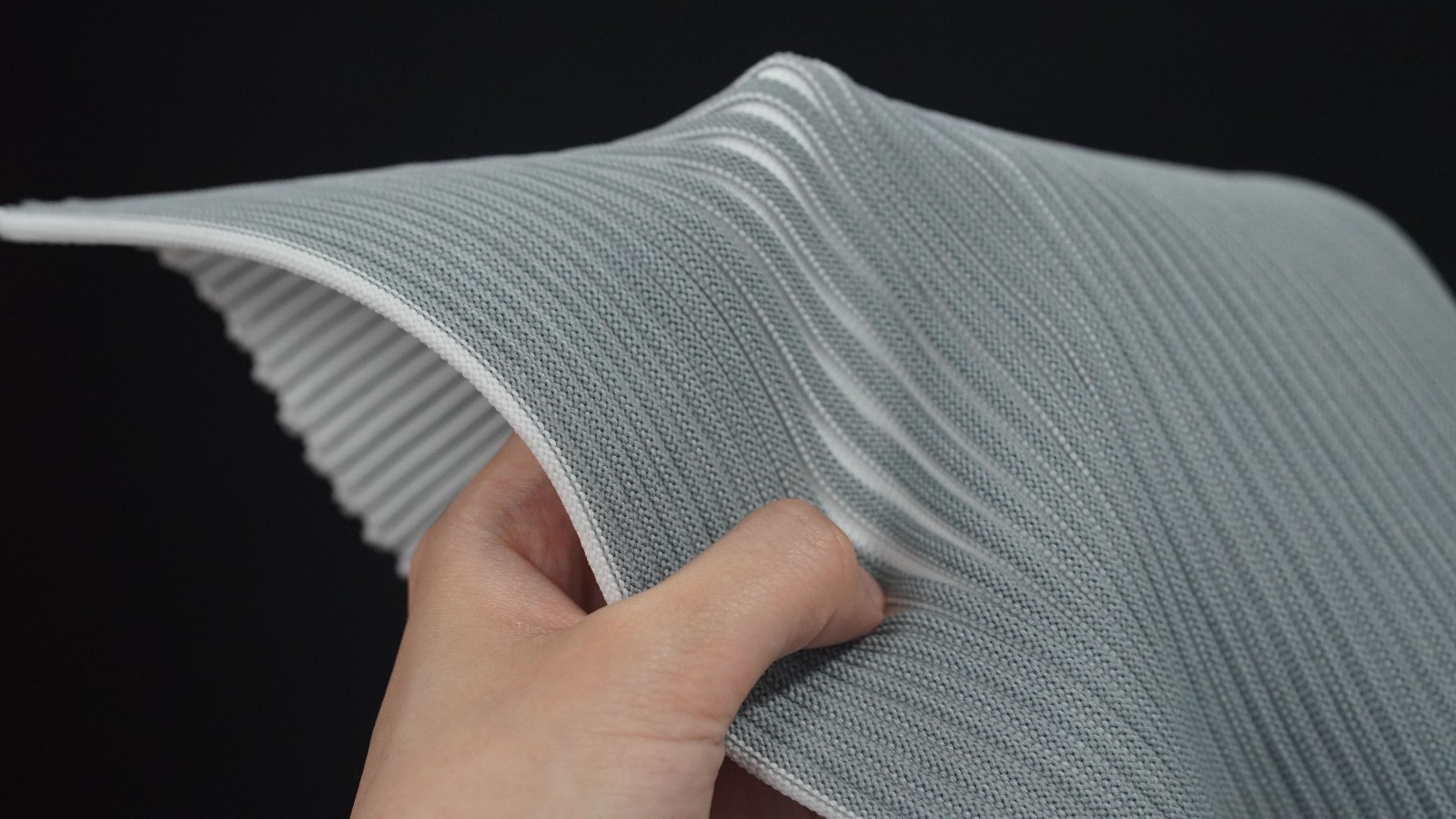
A two-tone elastic knit that keeps its second colour hidden at rest. As the textile stretches, bends or conforms to a curved form, the second colour gradually appears, turning movement into a dynamic colour transition across the product surface.
How does the two-colour effect work?
When the material is relaxed, the primary colour defines the overall appearance. As the surface stretches or changes shape, a second colour becomes visible, creating a two-colour effect that shifts with tension, curvature and movement. Different colour combinations can be developed to suit the product and brand context.
What kind of product experience can it create?
Hidden Colour Knit gives a flexible surface two visual states without adding a printed graphic. It is suited to areas where movement or deformation can become part of the product expression, including flexible zones in wearable products, automotive seating and robot coverings. Recovery, durability and final appearance require validation in the intended construction.
Tactile Relief Knit
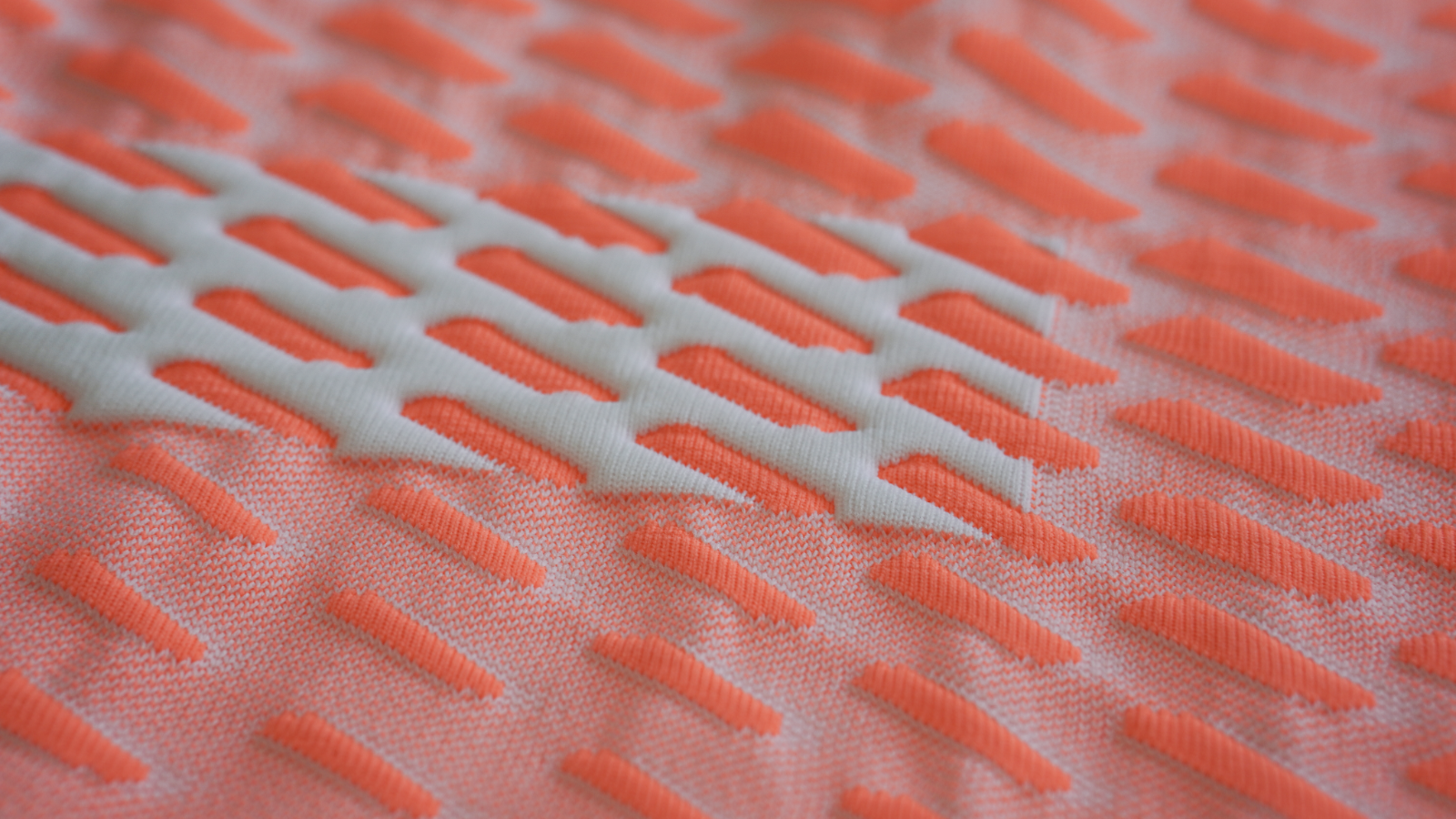
A three-dimensional knitted textile developed around fingertip perception. Micro-cushioned relief, mixed yarns and varied knitted structures create alternating sensations of softness, support and tactile rhythm as the hand moves across the material.
What is the core design logic behind this textile?
Visual appearance shapes the first impression of a material, but touch continues to influence the experience throughout use. This textile treats tactility as a design variable. Yarn selection influences softness, elasticity and how the surface feels against the skin, while three-dimensional knitted structures create variations in relief, cushioning and tactile rhythm beneath the fingertips.
How much can the visual and tactile result be customised?
Pattern, relief scale, density and tactile zoning can be developed for different product forms and brand languages. Air-layered jacquard, stitch transfer and openwork techniques create varied surface structures, while yarn material, thickness, elasticity and blend adjust the balance of softness, spring and support. Yarn systems and material composition can be further developed around application-specific performance and end-of-life requirements, subject to validation in the final construction.
From material sample to product-ready surface
TECHIC helps product teams identify surface material opportunities, translate CMF intent into supplier-ready specifications, coordinate sampling and prototype trials, and review production feasibility before a material route is locked.
Material scouting
We track emerging materials and manufacturing processes across China's supply chain.
CMF translation
We turn visual, tactile and brand intent into clear CMF specifications for suppliers.
Prototype validation
We coordinate material samples, prototype trials and product-context evaluation.
Production review
We review yield, process risk, quality control and scale-up feasibility before production.
How to access these materials and develop a product-ready surface
How can our team access the materials in this library?
Contact TECHIC with your product category, target application and design intent. We can check material availability, supplier suitability, sample options and feasibility based on the project context.
What forms of collaboration does TECHIC offer?
TECHIC can support material scouting, CMF strategy, sample development, supplier coordination, prototype validation and production implementation support. The scope can be a focused material search or a longer development program.
When should a product team involve TECHIC?
Before design freeze or tooling investment, when there is still room to compare material options, test surface effects and review production feasibility. TECHIC helps assess process route, yield, cost, quality control and scale-up risk before decisions are locked.